Nationwide Surge in Cases: A Public Health Crisis on the Brink of Losing Elimination Status

An in-depth analysis of the 2025 U.S. measles resurgence.

As of December 2025, the United States is grappling with a severe public health crisis as it confronts the largest and most widespread measles resurgence in over a quarter-century. The Centers for Disease Control and Prevention (CDC) has reported a staggering 1,912 confirmed cases across 43 states, a figure that unequivocally signals the erosion of the nation\'s hard-won measles elimination status. This prestigious public health achievement, signifying the absence of continuous disease transmission for over 12 months, has been a point of national pride since it was declared in 2000. Now, this 25-year legacy is in jeopardy. This alarming surge, driven by 47 distinct and persistent outbreaks, has exposed critical vulnerabilities in the country\'s public health infrastructure and reignited a contentious national conversation about vaccination, community immunity, and the pervasive, corrosive threat of misinformation.

The primary driver behind this unprecedented wave of infections is the steady and concerning decline in vaccination rates. According to comprehensive data from the Public Media Center (PMC), national kindergarten coverage with the two recommended doses of the measles, mumps, and rubella (MMR) vaccine has fallen from a robust 95.2% during the 2019-2020 school year to a precarious 92.7% in 2023-2024. This three-point drop places the national average well below the 95% threshold required to maintain effective herd immunity. This critical level of collective protection is what shields entire communities, especially the most vulnerable among us: infants too young to be vaccinated, individuals with compromised immune systems, and those for whom the vaccine is medically contraindicated. In some undervaccinated pockets of the country, often found in close-knit communities with shared philosophical or religious objections to vaccination, coverage rates are dramatically lower, creating what epidemiologists call "immunity gaps"—fertile ground for the highly contagious virus to establish a foothold and spread with explosive speed.

The demographic and clinical patterns of the 2025 outbreaks have been particularly alarming. The World Health Organization (WHO) reports that globally, approximately one in five individuals who contract measles will require hospitalization, a statistic that has been mirrored in the current U.S. crisis, placing immense strain on pediatric wards and emergency rooms across the nation. Children under the age of five are disproportionately affected and are far more likely to suffer from severe, life-threatening complications. These can include debilitating pneumonia, which is the most common cause of death from measles in young children, and encephalitis, a dangerous swelling of the brain that can lead to convulsions, permanent brain damage, or death. Healthcare providers on the front lines have described treating children with high fevers, painful rashes, and respiratory distress, a heart-wrenching reminder of a disease that many younger clinicians had only read about in textbooks. The psychological toll on families and healthcare workers is immense, as they confront the devastating consequences of a preventable disease.

Several states have emerged as epicenters of the crisis, each with its own unique set of challenges. In South Carolina, a major outbreak that began in the fall led to at least 254 individuals being placed under mandatory quarantine as overwhelmed health officials scrambled to contain the spread. The situation there, as reported by US News, highlights the immense logistical and social challenges of managing a large-scale public health response in a climate of fear and mistrust. Similarly, significant and difficult-to-control clusters have been identified in Arizona, Utah, and Washington. A recurring pattern has emerged: an outbreak often begins with a single imported case—a traveler returning from a region with a high measles incidence—which then rapidly spreads through local networks of undervaccinated individuals. These regional outbreaks are a stark illustration of a fundamental epidemiological principle: a virus as contagious as measles is ruthlessly efficient at finding and exploiting every gap in a community\'s immunological armor.

Public health officials are fighting a multi-front battle. Beyond the immediate and resource-intensive tasks of contact tracing, quarantine enforcement, and clinical management of patients, there is the ongoing, uphill struggle against a relentless tide of vaccine misinformation. The proliferation of sophisticated and emotionally charged anti-vaccine narratives on social media platforms, blogs, and video-sharing sites has sown deep-seated distrust and confusion. This "infodemic" has been a significant contributing factor to declining vaccination rates, as parents and caregivers are inundated with baseless claims linking the MMR vaccine to autism—a theory that has been thoroughly and repeatedly debunked by decades of scientific research—and other unfounded allegations about vaccine safety and efficacy. Rebuilding trust in public health institutions and promoting vaccine confidence has become a central, and perhaps the most challenging, pillar of the public health response.

The economic consequences of the 2025 measles resurgence are also substantial and far-reaching. Each outbreak, regardless of its size, triggers a costly and labor-intensive response that includes epidemiological investigations, widespread laboratory testing, and the mobilization of public health personnel. These direct costs, which can run into the millions of dollars for a single large outbreak, are coupled with significant indirect economic impacts, including lost productivity due to illness and quarantine, and the long-term costs of caring for individuals with measles-related disabilities. The situation serves as a stark reminder that investment in preventive measures, such as maintaining high vaccination coverage through robust public health programs, is not only a public health imperative but also a fiscally responsible and economically sound strategy.

In response to this escalating crisis, federal and state health agencies have been forced to intensify their efforts to promote vaccination. This includes launching targeted outreach programs to engage with undervaccinated communities, developing and disseminating culturally competent public awareness campaigns to counter misinformation, and working closely with healthcare providers to ensure they are equipped with the tools and information needed to address patient concerns and strongly recommend vaccination. The CDC has reiterated its unequivocal recommendation for the MMR vaccine, emphasizing its long-established and rigorously monitored record of safety and effectiveness. The path to regaining the nation\'s measles elimination status will be long, arduous, and will require a sustained, coordinated, and unified effort from all sectors of society. The 2025 crisis is a profound wake-up call, a clear and present danger that underscores the vital, non-negotiable importance of vaccination in protecting both individual and community health for generations to come.

Source: CDC Data (Dec 2025), CIDRAP, Scientific American, PMC, WHO, US News.

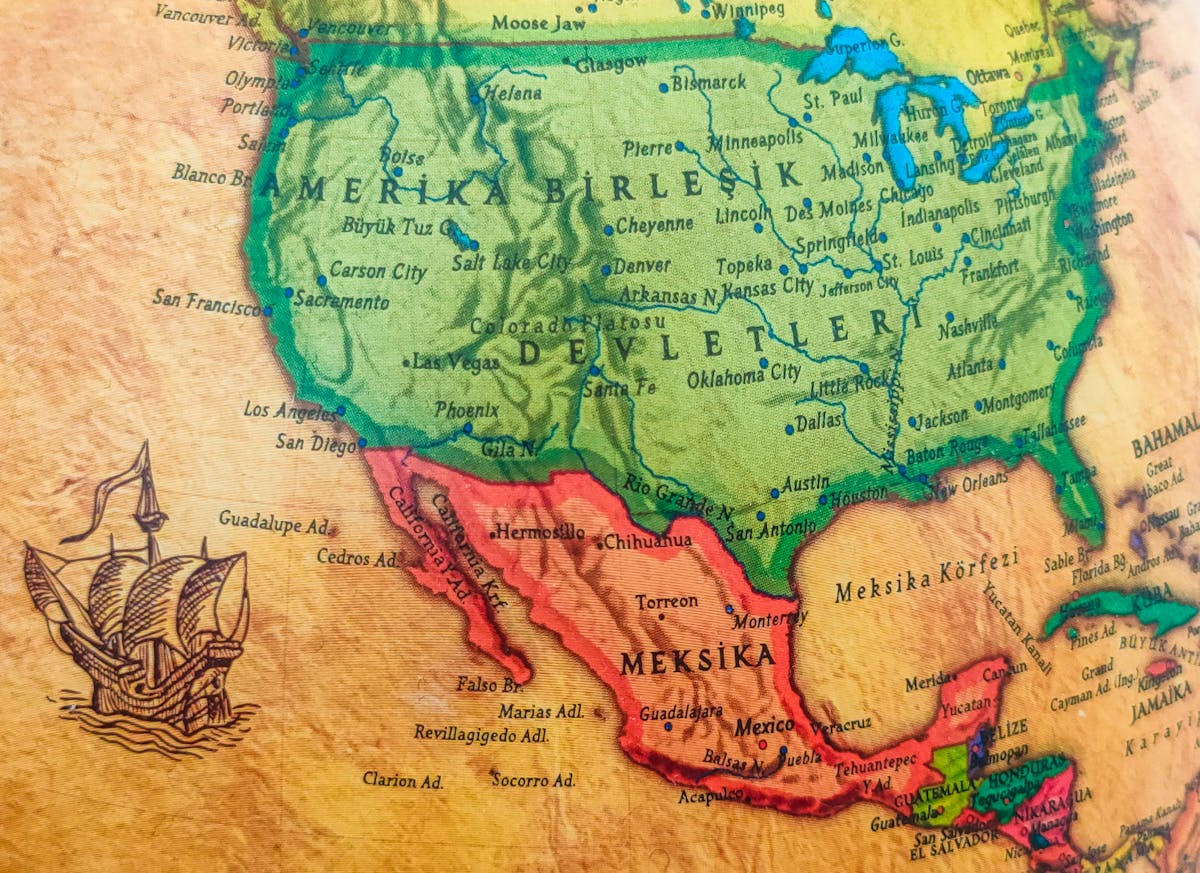
Vintage map of North America
The 2025 outbreaks have affected 43 jurisdictions nationwide, threatening the U.S. measles elimination status. Image: Pexels.